On this page
- Know what the activity is meant to change
- The campaign where the proof came up in conversation
- Set a baseline you can see a shift against
- Run one city against another
- Coverage quality means reaching the right audience
- How to handle lag
- The mistakes I see most
- “We can’t attribute it exactly” is not “we learned nothing”
- Offline campaign measurement plan
- FAQ
Know what the activity is meant to change
A lot of people do PR and offline marketing simply because they feel they should, without a clear reason. Experienced marketers know these methods can work, but the real challenge is deciding what you want to achieve with them right now.
These activities help raise your business’s profile and build trust and familiarity with your brand or team. That way, when someone needs what you offer, they already think of you. Sometimes this leads to direct sales. For example, when I worked at a large retailer in New Zealand, the head office spent a lot on radio, which worked well during sales events. Other times, the impact shows up as better conversations and easier selling, not just a sudden jump in numbers.
Always decide what result you want before spending any money. Offline marketing is subjective, and people in your organization will have strong opinions about how it should be done and whether it worked. If you write down your goal, audience, and purpose, you can explain why you’re doing the activity and how it supports your sales channels. This should go in your campaign brief.
The campaign where the proof came up in conversation
At a B2B software company, we used to support only one operating system. People saw us as a product just for Apple users, which limited our growth. When we launched for Microsoft, we placed sponsored content in major industry publications. We already had an audience we could reach, but our main goal was to change how everyone else saw us.
The biggest benefit was word of mouth. Customers started saying, “I heard you’re on Microsoft now,” which was important to them. No one clicked a link from a trade publication and bought immediately. Instead, we saw our message had spread because people repeated it back to us. This is the kind of evidence offline marketing gives you, but it only matters if you keep track of it.
Set a baseline you can see a shift against
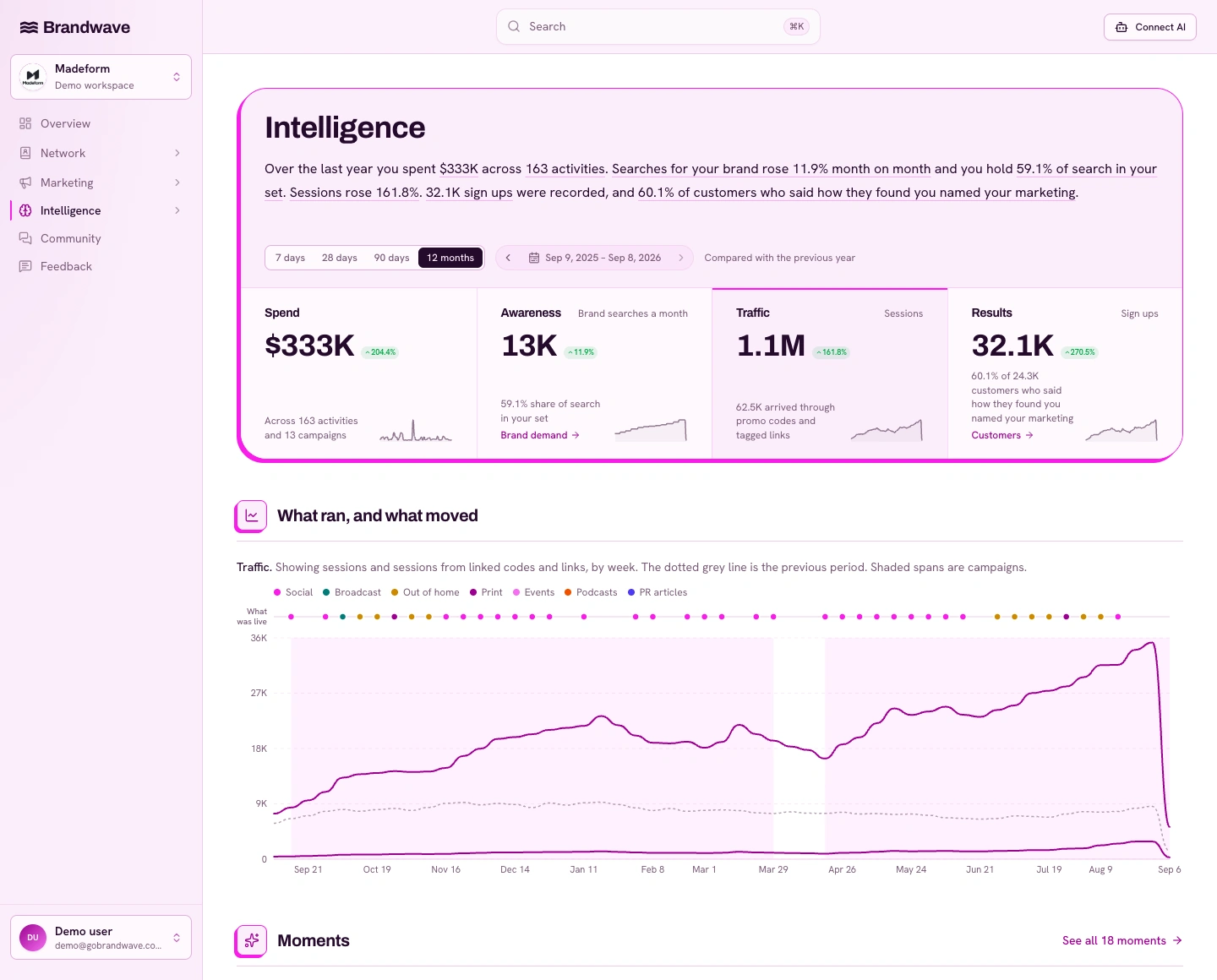
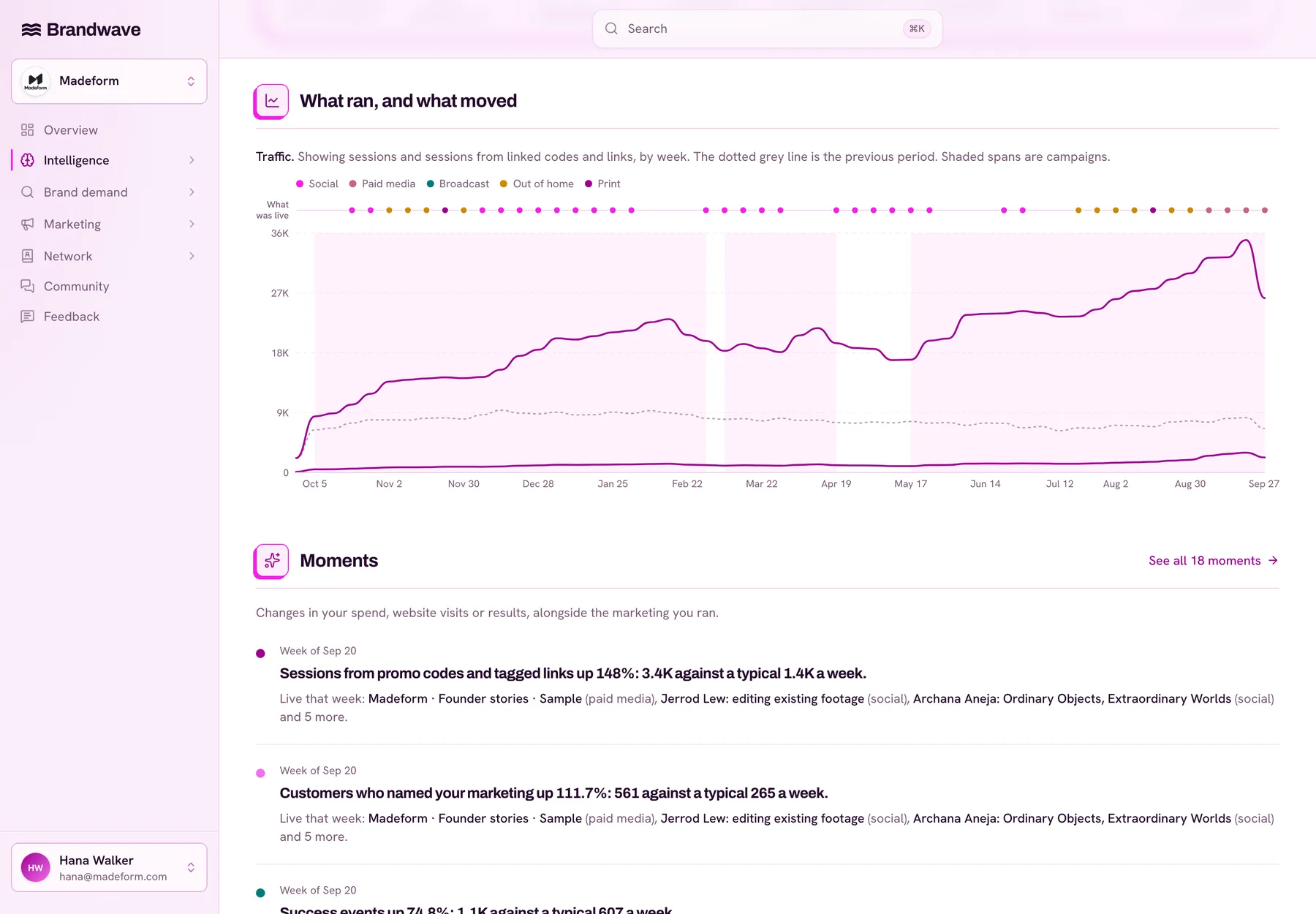
Set a starting point for everything before your activity begins: branded search, website traffic, direct visits, and engagement on your other channels. Comparing year over year can be tricky, so use the previous month and adjust for any seasonal changes. Even week by week, you should notice a spike when the activity starts and any changes that follow.
Branded search is the easiest way to see if you’re reaching people and building awareness. It doesn’t mean they’re ready to buy or that you’re reaching the perfect audience. Whether an increase is good depends on your audience size and your whole market. Still, it shows your channel is having an effect.
Direct traffic shows intent. If people are typing your name in, they know about you and want to learn more. Surveys and asking how people heard about you add a qualitative layer, since numbers alone can mislead you about who you reached. You might also see your ads get cheaper or social engagement rise while the activity runs.
Branded search lift
- What it tells you
- People are aware of you and looking you up
- What it does not tell you
- That they are in market or that they are the right audience
Direct traffic
- What it tells you
- Intent; people are coming to check you out
- What it does not tell you
- What sent them unless you ask
How Did You Hear About Us answers
- What it tells you
- The offline channel in the customer’s own words
- What it does not tell you
- The size of the audience that never signed up
Surveys
- What it tells you
- Who you reached and what they took away
- What it does not tell you
- Volume; it is a sample
Regional comparison
- What it tells you
- Whether the activity moved one market against another
- What it does not tell you
- The exact mechanism
Cheaper paid media or more social engagement
- What it tells you
- Demand is warmer across channels
- What it does not tell you
- Which activity warmed it
Coverage quality
- What it tells you
- Whether you reached the audience you intended
- What it does not tell you
- Business outcomes on its own
| Signal | What it tells you | What it does not tell you |
|---|---|---|
| Branded search lift | People are aware of you and looking you up | That they are in market or that they are the right audience |
| Direct traffic | Intent; people are coming to check you out | What sent them unless you ask |
| How Did You Hear About Us answers | The offline channel in the customer’s own words | The size of the audience that never signed up |
| Surveys | Who you reached and what they took away | Volume; it is a sample |
| Regional comparison | Whether the activity moved one market against another | The exact mechanism |
| Cheaper paid media or more social engagement | Demand is warmer across channels | Which activity warmed it |
| Coverage quality | Whether you reached the audience you intended | Business outcomes on its own |
Run one city against another
I’ve done this before: choose two similar regions where you want to grow, like two major cities in New Zealand. Run your campaign more strongly in one, then compare the results. This shows you the impact and whether increasing your efforts is still efficient. It’s similar to a holdout test for markets.
The regions you pick need to be similar. If one is already growing faster, you might give the campaign credit for a difference that was already there. Choose places with similar size, starting points, and seasonal trends, and record the baseline for both before you start.
Coverage quality means reaching the right audience
For PR, quality coverage means reaching the right audience. If you just want to be seen everywhere, you can chase big numbers and spread your message widely. But if you want real results, focus on respected publications and channels your audience actually uses. Targeted coverage is much more effective than trying to be everywhere at once.
That’s why I don’t rely much on earned media value or advertising value equivalents. These only tell you what the ad space would have cost, not what the coverage actually achieved. The PR industry’s own standard, AMEC’s Barcelona Principles 3.0, says in Principle 5: “AVEs are not the value of communication.” Instead, record which outlet covered you, how well it fit your audience, whether it mentioned and linked to your product, and if branded search or direct traffic increased afterward. That’s how you measure quality. A dollar amount tells a different story.
How to handle lag
Lag can be tricky. You usually know when your campaign went live, so you can look for results in the following weeks or months and compare them to your baseline. But linking a specific piece of coverage to a specific customer is much harder.
What has worked best for me is tracking early sign-ups. If someone signs up for a trial, a premium plan, or a newsletter and says they heard about you from your offline campaign, you have a record. Even if they become a customer months or years later, you can trace it back. Google Analytics or other tracking tools won’t give you this. Asking one question at sign-up is the most valuable thing you can do for offline measurement. The How Did You Hear About Us guide explains how to set this up.
Some products can’t use this method. If that’s the case for you, rely on your baseline, regional comparisons, and customer conversations. These are still valuable forms of evidence.
The mistakes I see most
- “We didn’t see a spike, so it didn’t work.” Offline results often show up as better conversations and easier sales. A spike is just one possible outcome.
- “It worked, but we can’t track it.” The result happened, but no one wrote it down. Make sure to record what happens before blaming the channel.
- “I didn’t see it, so I don’t feel like it worked.” Just because one person didn’t notice doesn’t mean it didn’t work. One person’s experience isn’t a measurement.
- Judging a campaign by its creative alone is a mistake. People often decide if they liked the ad and treat that as the result.
The worst mistake is spending a lot and learning nothing. If you’re investing in something you can’t fully track, make sure you learn something from it.
“We can’t attribute it exactly” is not “we learned nothing”
Attribution isn’t perfect, and people are unpredictable in how they research and buy. Marketing is both an art and a science. You can track everything and still have a bad campaign, because your team, creative work, execution, and understanding of your customer are just as important as the channel you use.
Correlation is useful when you combine it with what you already know and write it down. It’s useless if it just sits in a marketing leader’s head as “trust me.” Stakeholders want visibility and evidence, so log what you ran, when, what changed, what customers said, and what you would do differently. Saying you learned nothing is worse than admitting attribution is incomplete.
Offline campaign measurement plan
Use this plan before your campaign starts. For each activity, create a row with its expected change, target audience, baseline period, signals to watch before, during, and after, lag time, comparison region if you have one, an owner, and a column for lessons learned. The example rows show how PR, radio, outdoor, print, events, and podcast sponsorships each fill these in differently.
Offline campaign measurement plan (CSV)
Import this into Excel or Google Sheets. There are six example rows for PR, radio, outdoor, print, events, and podcasts, plus a blank row you can copy for your own campaign.
Brand-level signals like branded search and Share of Search are explained in the guides on measuringbrand awareness and Share of Search. For tips on what counts as real evidence versus a guess, see the guide on choosing attribution software you can trust.
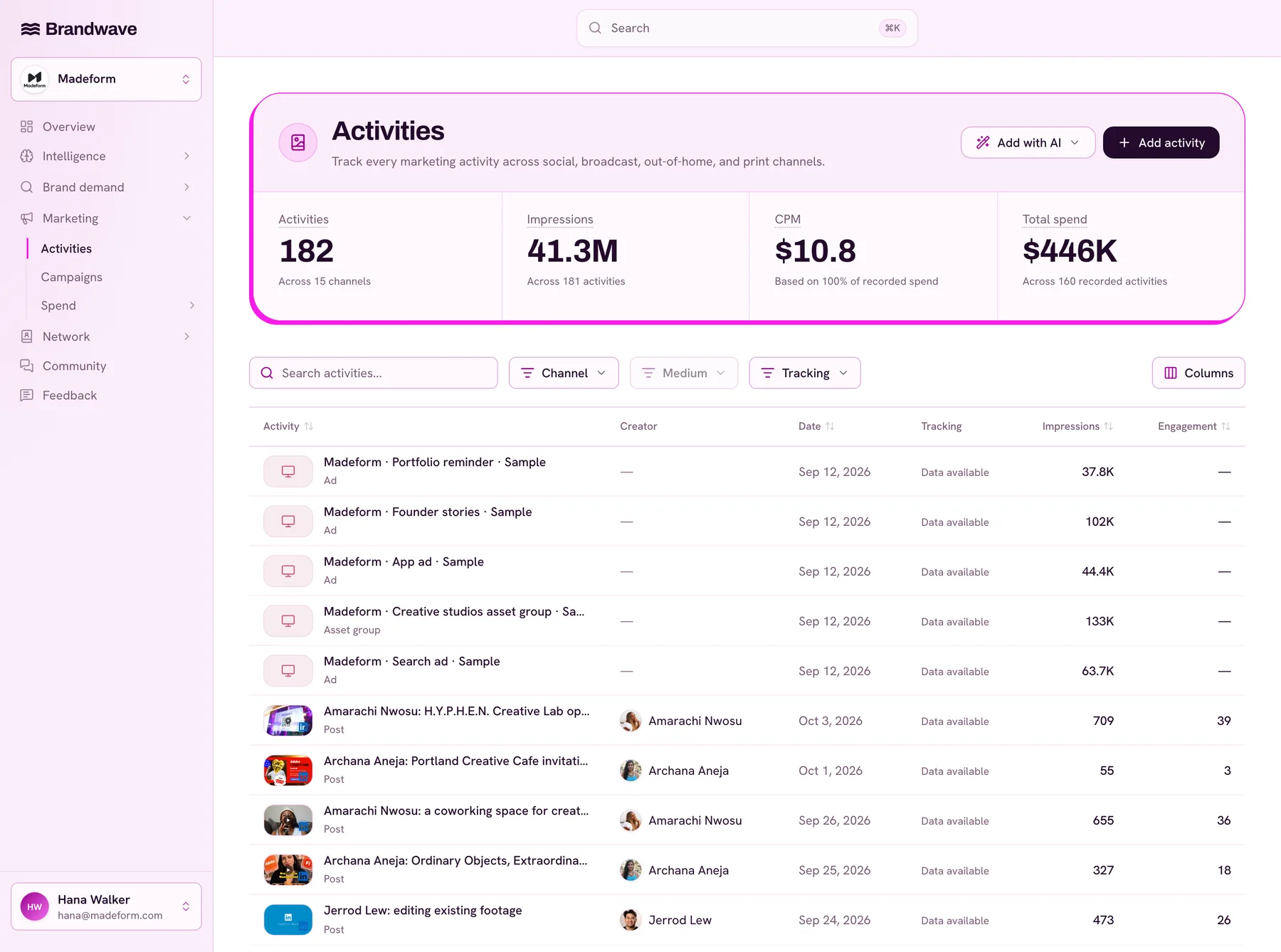
I’m building Brandwave because offline and PR activities deserve to be tracked just like everything else you do. You should know what they cost, what they were meant to achieve, what changed, and what customers said. When you put this next to your digital channels, you’ll have a clear answer to whether it worked.
FAQ
Sources

Get the next article by email
Drop us your email and we'll let you know when we publish a new article.
By continuing you'll get an email for each new article and occasional product news from Brandwave. Unsubscribe any time. Privacy