On this page
- Anyone can be a B2B influencer now
- The founder who did not want to be on camera
- 2,000 exact buyers or 50,000 loosely relevant followers?
- What to measure when nobody can buy today
- Connecting month one to the deal in month ten
- You should know within a quarter
- Content reuse is a return too
- Where LinkedIn, thought leadership and employee advocacy fit
- B2B creator measurement playbook
- FAQ
Anyone can be a B2B influencer now
In B2B, an influencer is usually a domain expert or someone who shares insights about a specific niche. They might have followers, but what matters most is whether their content gets attention and engagement. Sometimes they talk about their own company or product, which also influences others. Founder-led growth and building in public are just other ways to describe this idea.
Traditionally, an influencer is someone who earns a living by making content online. In B2B, people often become influential because of their regular jobs. Executives, practitioners, customers, and employees can all have influence. I think these categories are starting to blend, and the differences do not matter much. What matters is if someone creates interesting content. That is what makes them an influencer, not just a commentator.
The main traditional B2B influencer advice I disagree with is the definition itself. Do not focus too much on follower counts or strict categories. Instead, look in your user base and community for people who can influence others to choose your product. You can work with many types of people, and each can play a different role in your program.
Content
- What they bring
- Clear, credible material about the problem you solve that you can reuse
- What I measure them on
- Quality, how often it ships, and where it gets reused by sales and marketing
Reach
- What they bring
- Awareness among a broad but relevant audience
- What I measure them on
- Impressions, engagement, branded search lift and new names entering your nurture
Trust
- What they bring
- A small, exact audience that already believes them
- What I measure them on
- Sign-ups, webinar attendance and How Did You Hear About Us mentions from the right companies
Access
- What they bring
- Introductions to other influential people and partners
- What I measure them on
- Who they brought into the program and what those people went on to produce
| What you are hiring them for | What they bring | What I measure them on |
|---|---|---|
| Content | Clear, credible material about the problem you solve that you can reuse | Quality, how often it ships, and where it gets reused by sales and marketing |
| Reach | Awareness among a broad but relevant audience | Impressions, engagement, branded search lift and new names entering your nurture |
| Trust | A small, exact audience that already believes them | Sign-ups, webinar attendance and How Did You Hear About Us mentions from the right companies |
| Access | Introductions to other influential people and partners | Who they brought into the program and what those people went on to produce |
A program can succeed if someone creates great content or simply because they have influence you want to use. It depends on your goals. Decide what role you want to fill before agreeing on payment, so your measurement plan matches that choice.
The founder who did not want to be on camera
I have worked closely with a B2B program built around a practitioner founder. This person was a real expert with valuable experience and insights. They were willing to be on camera and talk about the product, but it did not come naturally to them. They did not create content on their own, so it was hard to build an audience through their work.
Expertise is not enough on its own. Willingness and consistency matter just as much as knowledge, and a hesitant expert will not create the steady flow of content an audience expects. If I measured that program again, I would first track how often content is published. If content is not being shared, nothing else in the funnel will move forward, and you should not wait three months to notice that.
That founder turned out to be great at connecting with other influential people, which helped the program grow. They were not going to be a major influencer themselves, but their network was valuable. If I had only measured them as a content creator, I would have thought the program failed. But if you look at the people they brought in, they made a real difference.
I have also worked with a YouTube creator and saw a business grow almost entirely from one person's content. That takes a special kind of person. Most founders and executives are not like that, so your program should not expect them to become one.
2,000 exact buyers or 50,000 loosely relevant followers?
If I had to choose between a creator with 2,000 followers who are exactly my target buyers and one with 50,000 loosely relevant followers, I would pick the 2,000. For conversions, that is the group to focus on. In B2B, a small but highly relevant audience is valuable because each sale matters. You can speak directly to them, target your message, and build trust by winning over the person they already follow.
The 50,000 followers are not useless. If you have a good way to nurture a large list and want to build awareness so competitors are not the only ones being noticed, the bigger audience makes sense. Just expect different results: brand awareness and new contacts, not conversions right away. What you should not do is buy the 50,000 and then judge them against a conversion target they were never going to reach.
What to measure when nobody can buy today
Impressions, reach, and engagement are softer metrics, but they still give you early feedback. If you see impressions and reach but no engagement, your content is not connecting. If there is engagement but no one visits your site, the content might need more time or a clearer call to action. These metrics show how your content is doing before people reach your platform.
When the buying cycle is long, I rely most on softer conversions. If people find you through a creator and sign up for a newsletter, register for a webinar, or start a trial, it shows the creator reached an interested audience and the partnership was valuable. Webinars are popular in B2B software for this reason: attendance shows engagement and future demand.
Later in the process, branded searches and event activity show that people are interested and actively researching. Account engagement tells you if the right companies are involved, not just how many people. Here is how I prioritize these signals.
Impressions and reach
- What it tells you
- The content was distributed to an audience
- What it does not tell you
- Whether anyone cared or whether they were your buyers
- When to expect it
- Days
Engagement
- What it tells you
- The content landed with that audience
- What it does not tell you
- Whether the audience has any intent
- When to expect it
- Days to weeks
Visits from the creator's link or tag
- What it tells you
- People acted on the content
- What it does not tell you
- Who they are or whether they will come back
- When to expect it
- Weeks
Newsletter sign-up, trial or webinar registration
- What it tells you
- Higher intent and a name you can nurture and ask
- What it does not tell you
- That they will buy, but it is the strongest early evidence
- When to expect it
- Month 1 to 2
How Did You Hear About Us mentions
- What it tells you
- The creator was the reason someone showed up, in their own words
- What it does not tell you
- The size of the audience that did not sign up
- When to expect it
- At first sign-up, then again at purchase
Branded search and event attendance
- What it tells you
- People are researching and evaluating you
- What it does not tell you
- Which creator caused it unless you ask
- When to expect it
- Month 2 to 4
Account engagement
- What it tells you
- The right companies are active, not just the right volume
- What it does not tell you
- Who inside the account was influenced
- When to expect it
- Month 2 onward
Pipeline and closed deals
- What it tells you
- The outcome you wanted
- What it does not tell you
- Anything, unless you recorded the earlier signals
- When to expect it
- One full sales cycle
| Signal | What it tells you | What it does not tell you | When to expect it |
|---|---|---|---|
| Impressions and reach | The content was distributed to an audience | Whether anyone cared or whether they were your buyers | Days |
| Engagement | The content landed with that audience | Whether the audience has any intent | Days to weeks |
| Visits from the creator's link or tag | People acted on the content | Who they are or whether they will come back | Weeks |
| Newsletter sign-up, trial or webinar registration | Higher intent and a name you can nurture and ask | That they will buy, but it is the strongest early evidence | Month 1 to 2 |
| How Did You Hear About Us mentions | The creator was the reason someone showed up, in their own words | The size of the audience that did not sign up | At first sign-up, then again at purchase |
| Branded search and event attendance | People are researching and evaluating you | Which creator caused it unless you ask | Month 2 to 4 |
| Account engagement | The right companies are active, not just the right volume | Who inside the account was influenced | Month 2 onward |
| Pipeline and closed deals | The outcome you wanted | Anything, unless you recorded the earlier signals | One full sales cycle |
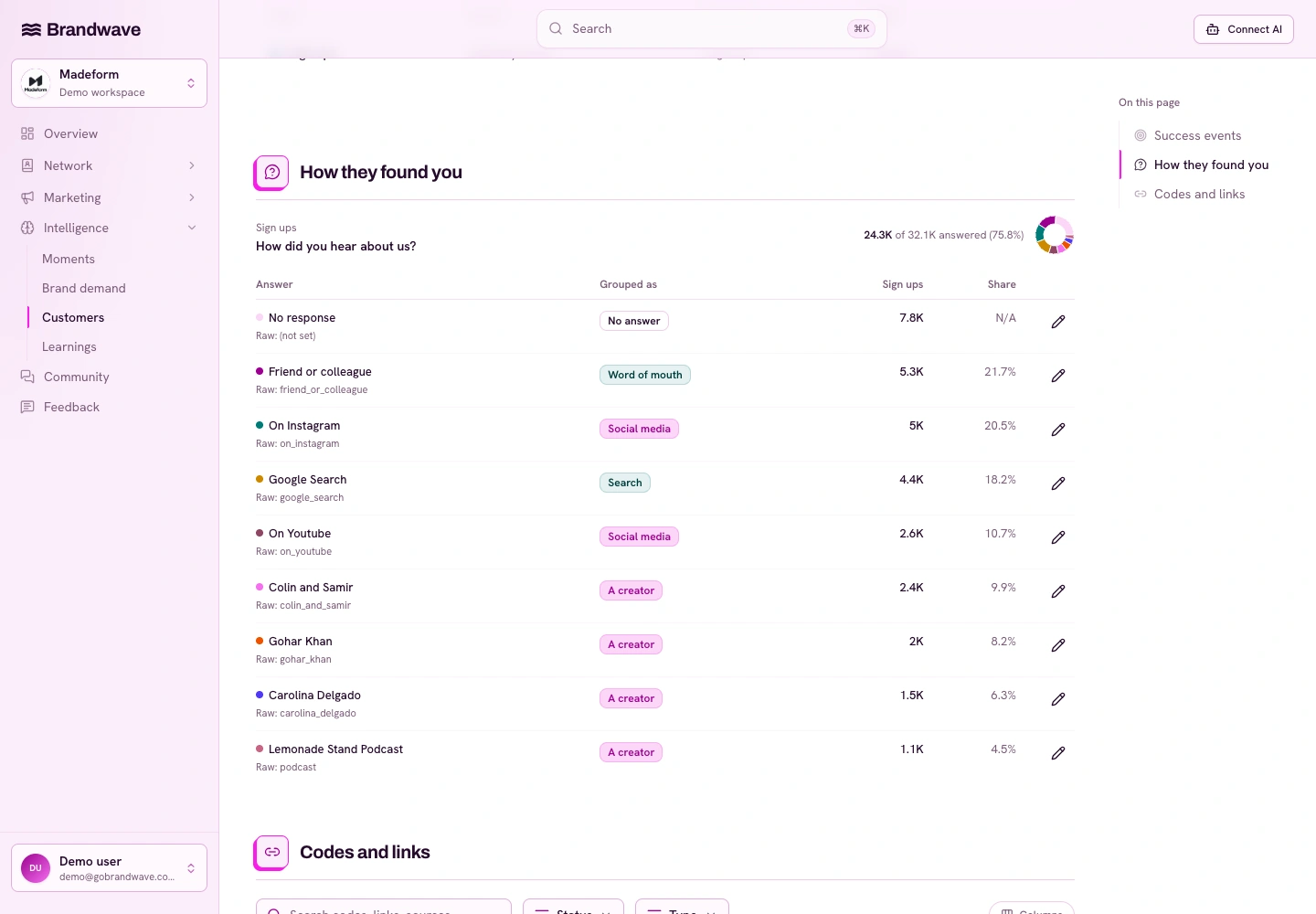
There are many tools now that de-anonymize traffic or match visitors to companies. These can help, but they are not right for every product. The simplest tool is still to ask people how they heard about you when they sign up for something, and keep that answer with their record.
Connecting month one to the deal in month ten
With a long buying cycle, the key is to capture something trackable early. If a creator brings people to you in the first month and some sign up for a newsletter or trial, ask How Did You Hear About Us and record their answer. Also, note where their first visit came from. When that person converts months later, you will know where it started. Each signal alone is not proof, but together they create a trail you can follow.
If you want to build awareness in a long cycle, you need to start early, before people are ready to evaluate. Otherwise, you miss your chance. The content that works early is different from what works later: a networking event or community gathering helps people hear about you, while specific technical material or a problem-focused webinar works when intent is higher. Each creator's content usually fits one of these stages, so measure it based on the stage it supports.
Here is a hypothetical example of what the trail looks like for one creator over one sales cycle. The numbers are illustrative.
1
- What happened
- Creator publishes two posts and a short video. 180 tagged visits, 14 newsletter sign-ups, 3 trial starts.
- What you record
- Visits by link, each sign-up's first source, and the 9 people who named the creator in How Did You Hear About Us
2
- What happened
- You run a webinar on the problem the creator talked about. 6 of the 14 attend.
- What you record
- Attendance against the sign-up list, and which companies they work for
3
- What happened
- Branded search is up on the prior quarter. Sales books 4 discovery calls, 2 with people from the creator's list.
- What you record
- The calls, the accounts, and whether anyone mentioned the creator on the call
4 to 8
- What happened
- Two accounts move through evaluation. The creator's explainer video is sent by sales during both.
- What you record
- Where the content was reused and in which deals
9 to 10
- What happened
- One deal closes. The buyer's first record is the month-one newsletter sign-up that named the creator.
- What you record
- The closed deal linked to its first source, plus the second deal still open
| Month | What happened | What you record |
|---|---|---|
| 1 | Creator publishes two posts and a short video. 180 tagged visits, 14 newsletter sign-ups, 3 trial starts. | Visits by link, each sign-up's first source, and the 9 people who named the creator in How Did You Hear About Us |
| 2 | You run a webinar on the problem the creator talked about. 6 of the 14 attend. | Attendance against the sign-up list, and which companies they work for |
| 3 | Branded search is up on the prior quarter. Sales books 4 discovery calls, 2 with people from the creator's list. | The calls, the accounts, and whether anyone mentioned the creator on the call |
| 4 to 8 | Two accounts move through evaluation. The creator's explainer video is sent by sales during both. | Where the content was reused and in which deals |
| 9 to 10 | One deal closes. The buyer's first record is the month-one newsletter sign-up that named the creator. | The closed deal linked to its first source, plus the second deal still open |
By month ten, that creator has one closed deal linked to them, one deal still open, a group of webinar attendees, and content that sales used twice. This is a result you can trust. Without the record from month one, you would only have a closed deal and a guess.
You should know within a quarter
For most B2B programs, you should know within three months if things are working. Not if deals have closed, but if the early signals are there. I have worked in a B2B software company where we ran a creator program and the activity should have shown up quickly. It did not, and the reason was that we had the wrong creators. We changed them and it started working. We saw that early because we watched the softer metrics, not just revenue.
That is also what failure looks like. After a quarter, you might see reach but little engagement, or engagement but no sign-ups, and no one mentions the creator when asked how they found you. When this happens, change the creators before giving up on the channel. For us, the problem was not the channel, but the fit between creators and audience.
How long you run the whole program depends on your business and deal size. Benchmark it like any investment, comparing it to your usual customer acquisition cost and sales cycle. If deals usually take nine months, do not judge revenue at three months. But you can still check if the right people are showing up.
Content reuse is a return too
We have reused creator content on our website and in nurture campaigns as endorsements, product explanations, and highlights of what people liked about the product. I have done this myself and see it as a measurable return. Usually, the reader is already in the funnel, so the content helps close the deal by building trust.
Track where each piece of content is reused and which deals it supports. When you review the creator at the end of the quarter, consider this reuse along with their sign-ups and mentions. If sales keeps sharing a creator's content with prospects, they are earning their fee, even with a small audience. It also changes how you think about what you pay creators: you are often paying for the content itself as much as the audience.
Where LinkedIn, thought leadership and employee advocacy fit
Most of this activity happens on LinkedIn, and terms like LinkedIn influencer marketing, thought leadership marketing, and employee advocacy programs describe similar efforts. Thought leadership means your executives act as influencers. Employee advocacy is your team doing this on a smaller scale. Hiring an outside practitioner or creator means someone your buyers already follow is doing the job.
I measure all these activities the same way, because buyers do not care about the label. Edelman and LinkedIn found that 73% of B2B decision makers trust thought leadership more than product sheets or marketing materials, which matches my experience: content from a person has more impact than content from a brand. Gartner says B2B buying groups usually have five to ten people, so reaching a small, targeted audience is important. You often need to reach several people within one company, not just one person in many companies.
No matter what label you use, the person needs to show up consistently, the audience needs to be the right fit, and you need to record early signals so you can trace the eventual deal back.
B2B creator measurement playbook
Before a creator publishes content, decide what role you are hiring them for, what signals you expect at each stage, when to expect them, and who will track them. This playbook lays it out as a sheet for each creator. The first-quarter review and the full-cycle review are listed separately for a reason.
B2B creator measurement playbook (CSV)
Import this into Excel or Google Sheets. Use one row for each signal, including the funnel stage, how it is tracked, when to expect it, what decision it informs, and who is responsible. Make a copy for each creator.
If you are still choosing creators or tools, the influencer platform selection guide explains what to look for in data ownership and exports. The creator dashboard article shows what to present to leadership once your program is running. Air's partnership with Kareem Rahma is a good public example of choosing a B2B creator for fit, not just follower count.
I am building Brandwave because the hardest part is not collecting signals, but keeping them linked to the creator and account for ten months. When you have creator activity, costs, How Did You Hear About Us answers, and outcomes all in one record, you can clearly show whether a creator was effective.
FAQ
Sources
- Gartner: The B2B Buying Journey (gartner.com)
- Edelman and LinkedIn: 2024 B2B Thought Leadership Impact Report (edelman.com)
- Edelman and LinkedIn: 2025 B2B Thought Leadership Impact Report (edelman.com)

Get the next article by email
Drop us your email and we'll let you know when we publish a new article.
By continuing you'll get an email for each new article and occasional product news from Brandwave. Unsubscribe any time. Privacy